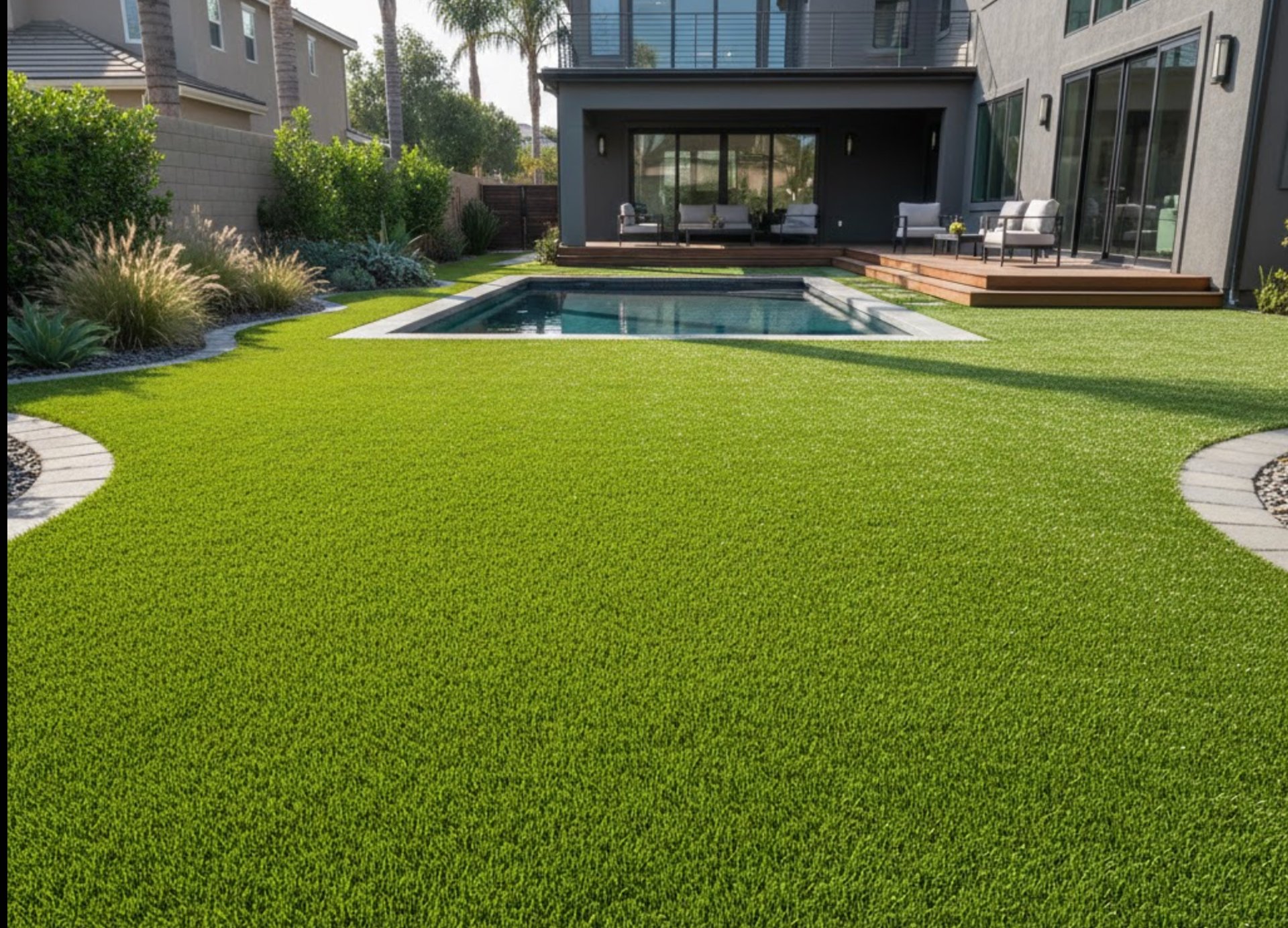
Q: Why is artificial turf better than natural grass in Florida?
A: Florida’s climate is hot, humid, and often faces droughts — which makes maintaining natural grass a challenge. Artificial turf stays green year-round, requires no watering, and stands up to intense sun and rain.
Q: Does artificial turf help save water?
A: Yes! Artificial turf doesn’t need watering like natural grass. This helps conserve water, lower your utility bills, and protect Florida’s natural resources — especially during dry seasons.
Q: What kind of maintenance does artificial turf need?
A: Very little! There’s no mowing, no fertilizing, and no pest control. You’ll save time and money compared to a natural lawn — and your turf will always look perfectly trimmed.
Q: How long does artificial turf last in Florida?
A: High-quality artificial turf is built to last 15–20 years, even under Florida’s intense sun, heavy rain, and high foot traffic. It won’t fade, die off, or get patchy with the seasons.
Q: Is artificial turf environmentally friendly?
A: Yes! It eliminates the need for pesticides and fertilizers, which can run off into Florida’s waterways. Many turf options are made from recyclable materials, and modern turf products are designed to minimize harmful microplastics.
Q: Will artificial turf get too hot in the Florida sun?
A: Modern turf is designed with UV-resistant materials that reflect heat and help keep the surface cooler than older generations of synthetic grass. It also drains quickly after rain, so there are no puddles, mud, or flooding.
Q: Is it safe for kids and pets?
A: Absolutely. Artificial turf provides a clean, soft, and mud-free surface for kids and pets to play on. With no pesticides or lawn chemicals needed, there’s less risk of exposure to harsh products, and no dirt gets tracked into the house.
Q: Can turf help reduce allergies?
A: Yes. Unlike natural grass, artificial turf doesn’t produce pollen — making it a great option for families with allergy sufferers who react to grass and seasonal yard allergens.
Q: Is artificial turf a good investment?
A: Yes. While it may cost more upfront, you can save thousands over time on water, landscaping, fertilizers, and lawn care services. It’s a smart, long-term solution for Florida homeowners who want a consistently green lawn with lower upkeep.
Q: How does the artificial turf installation process work?
A: First, a turf specialist evaluates your property, measures the area, and discusses your goals. Then the crew removes existing grass, installs a compacted base and drainage, and lays, secures, and infills the turf for a smooth, finished surface.
Q: How long does turf installation take?
A: Most residential projects can be completed in 1–3 days, depending on yard size, access, and site preparation needs. Larger commercial, playground, or sports field projects may take longer and are scheduled with a clear timeline.
Q: Do you handle drainage and leveling as part of the installation?
A: Yes. Proper grading and drainage are built into the installation so water flows away from your home or building. This reduces standing water, mud, and uneven settling over time.
Q: Where can artificial turf be installed besides a front yard?
A: Artificial turf works well in backyards, side yards, pool decks, dog runs, putting greens, playgrounds, rooftop spaces, medians, and around commercial properties like offices, gyms, and retail centers.
Q: Do you install turf for sports fields and gyms?
A: Yes. Turf can be installed for football fields, soccer fields, training facilities, indoor gyms, sled tracks, and agility lanes, providing durable, high-performance surfaces for athletes year-round.
Q: Is artificial turf good for playgrounds?
A: Yes. Playground turf creates a cushioned, even surface that reduces mud and tripping hazards. When paired with the right padding underneath, it can help meet safety and fall-height standards for play areas.
Q: How does artificial turf hold up to dogs and pets?
A: Pet-friendly turf systems are designed to resist digging, staining, and heavy use. Liquids drain through the backing, and solid waste can be picked up and rinsed away, keeping the yard cleaner and easier to maintain.
Q: Will pet urine smell on artificial turf?
A: With proper drainage, occasional rinsing, and the use of pet-friendly infill or deodorizing treatments, odors can be greatly reduced. A simple regular cleaning routine keeps the turf fresh for homes with pets.
Q: Does artificial turf feel comfortable to walk and play on?
A: Yes. Quality turf uses soft, flexible fibers and can include padding underneath, creating a comfortable, cushioned surface for walking, lounging, and play.
Q: How durable is artificial turf with heavy foot traffic?
A: High-quality turf is engineered to handle heavy use in high-traffic areas without thinning, turning to mud, or developing bare spots. It is ideal for busy family yards, pet areas, and commercial spaces.
Q: Do you offer a warranty on turf and installation?
A: Many turf products come with a manufacturer warranty, often covering UV stability and wear, and reputable installers also provide a workmanship guarantee. Together, these protect your investment for many years.
Q: How much does artificial turf cost in Florida?
A: The cost depends on the size of the project, the type of turf selected, how much site prep and base work is needed, and any custom features like putting greens or added drainage. A detailed quote is usually provided after an on-site evaluation.
Q: Do you offer financing or payment plans for turf installation?
A: Some turf companies do offer financing or payment plan options, allowing homeowners to spread the cost of installation over time. Ask about available programs during your consultation.
Q: Do you serve all of South Florida?
A: Many turf installers serve West Palm Beach and surrounding areas, and often cover a wider region of South Florida for both residential and commercial projects. Service areas are typically discussed during the initial call or consultation.
Q: Why should I choose a local Florida turf company?
A: Local installers understand Florida’s heat, humidity, and rainfall and can recommend products that perform best in this climate. They also provide more responsive service, better communication, and knowledge of local regulations and HOA requirements.
Q: What is the best type of turf for pet owners in Florida?
For pet owners, you want a shorter denser turf to make picking up waste easier. We also use an antimicrobial acrylic-coated infill to combat the humidity and pet odors.